
table of contents
Yiwu is known as one of the world’s largest wholesale markets for small commodities. Every day, thousands of shipments leave this city and reach customers across the globe. However, without the right strategy, shipping from Yiwu can become complicated and expensive.
In this guide, you will learn the full process, compare shipping methods, and discover practical tips to make your import business more efficient.
1. Why Yiwu Is a Key Export Hub
Yiwu has built a strong reputation as a global sourcing center. The Yiwu Market offers millions of products across categories such as home goods, accessories, toys, and packaging supplies. This makes it an ideal place for buyers who need variety and flexible order quantities.
Another advantage is the mature supply chain. Suppliers in Yiwu are experienced in exporting goods, and logistics services are well developed. You can find freight forwarders, warehouses, and consolidation services all in one place.
For small and medium-sized businesses, Yiwu is especially attractive. You can source from multiple suppliers and combine products into one shipment, which helps reduce costs and simplify operations.
2. Step-by-Step Shipping Process from Yiwu
Shipping from Yiwu to the USA or Europe usually follows a clear process. Understanding each step will help you avoid delays and unexpected costs.
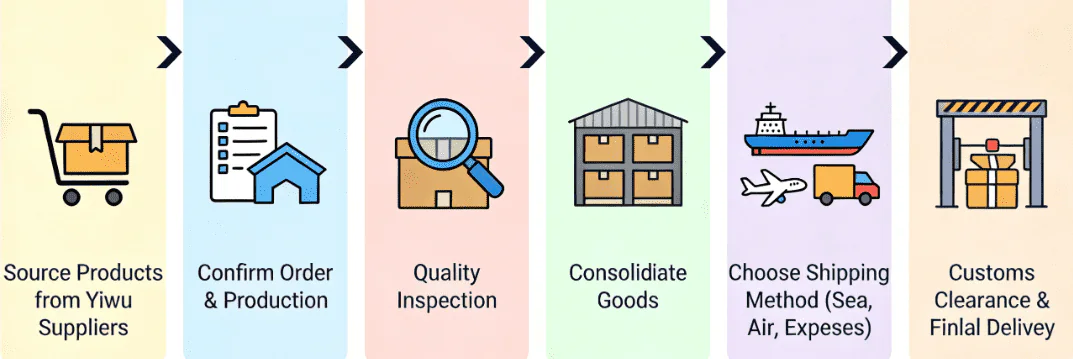
Step 1: Source Products from Suppliers
You can source products from Yiwu Market, online platforms, or through a sourcing agent. At this stage, it is important to confirm product details, pricing, and packaging requirements.
Clear communication with suppliers is essential. Make sure you understand what is included in the price and whether export packaging is provided.
Step 2: Confirm Order and Production
Once you place the order, suppliers will begin production or prepare stock. You should confirm the lead time, which usually ranges from a few days to several weeks depending on the product.
It is also important to agree on payment terms. Many suppliers require a deposit before production starts.
Step 3: Quality Inspection
Before shipping, checking product quality is highly recommended. This step helps reduce the risk of receiving defective goods.
You can hire a third-party inspection company or work with a sourcing agent who offers quality control services. A proper inspection can save you from costly returns and customer complaints.
Step 4: Consolidate Goods
If you order from multiple suppliers, consolidation becomes very important. Instead of shipping each order separately, you can combine all goods into one shipment.
This approach reduces shipping costs and simplifies customs clearance. It also ensures that all items arrive together, which is important for inventory management.
Step 5: Choose Shipping Method
Selecting the right shipping method depends on your budget, timeline, and cargo size. The main options include sea freight, air freight, and express shipping.
Each method has its own advantages, and choosing the right one can significantly impact your overall cost.
Step 6: Customs Clearance and Final Delivery
After the goods arrive in the destination country, they must go through customs clearance. This process requires proper documentation, including invoices, packing lists, and HS codes.
Once cleared, the shipment will be delivered to your warehouse, store, or directly to your customers.
3. Shipping Methods Comparison (Yiwu → USA & Europe)
📊Quick Comparison Table
| Shipping Method | Cost Level | Transit Time (USA) | Transit Time (EU) | Best For | Key Advantage | Main Limitation |
| Sea Freight | Low | 25–35 days | 30–40 days | Bulk orders | Lowest cost per unit | Slow delivery |
| Air Freight | Medium | 5–10 days | 5–8 days | Medium shipments | Good balance of cost & speed | Higher cost than sea |
| Express Shipping | High | 3–7 days | 3–5 days | Small & urgent orders | Fastest delivery | Expensive for large cargo |
Import Duties & Customs Tips
Understanding import duties and customs procedures is crucial when shipping from Yiwu to the USA or Europe. Proper preparation ensures smooth clearance, reduces delays, and helps you avoid unexpected costs.
Shipping to the USA
For shipments entering the United States, Section 321 allows many packages valued under $800 to enter duty-free. This is especially useful for small e-commerce orders and sample shipments. Larger shipments, or goods above the $800 threshold, may be subject to import duties, customs fees, and inspection requirements.
To avoid problems at customs, make sure to provide accurate documentation. This includes:
- HS Code: A standardized code that classifies your product for customs purposes.
- Invoice: Commercial invoice showing product description, value, and quantity.
- Packing List: Details of the shipment, including item quantities, dimensions, and weight.
Accurate paperwork is essential to prevent delays and fines. Using a reliable freight forwarder or sourcing agent can simplify this process and ensure compliance with US regulations.
Shipping to Europe
When shipping to countries within the European Union, import duties and VAT apply. VAT rates vary by country, and import duty depends on the type of product and its declared value.
Key documents required for European customs clearance include:
- HS Code: Ensures the correct duty rate is applied.
- Invoice: Must clearly list product value, description, and quantity.
- Customs Declaration Form: Required for all shipments entering the EU.
- Packing List: Helps customs verify the contents of your shipment.
Failure to provide complete and accurate documents can result in delays, fines, or even shipment rejection. Working with a sourcing agent or freight forwarder familiar with European import rules can help streamline the process and reduce the risk of costly mistakes.
Tips for Smooth Customs Clearance
- Always confirm the correct HS code with your supplier or freight forwarder.
- Ensure invoices match the shipment contents exactly.
- Keep all documentation organized and easily accessible for customs inspection.
- Consider using a sourcing agent to manage compliance and reduce risk.
By understanding import duties and preparing proper documentation, you can save time and money while ensuring your goods from Yiwu reach the USA or Europe without problems.
How to Choose the Right Shipping Method
Choose Sea Freight if:
- You are ordering in large quantities
- Your priority is reducing cost
- You can plan inventory in advance
- Your products are heavy or bulky
Choose Air Freight if:
- You need faster delivery but still want to control cost
- Your shipment size is medium
- You are restocking fast-selling products
- You want a balance between speed and budget
Choose Express Shipping if:
- You need delivery within a few days
- You are shipping samples or small packages
- Your order is urgent or time-sensitive
- You prefer simple door-to-door service
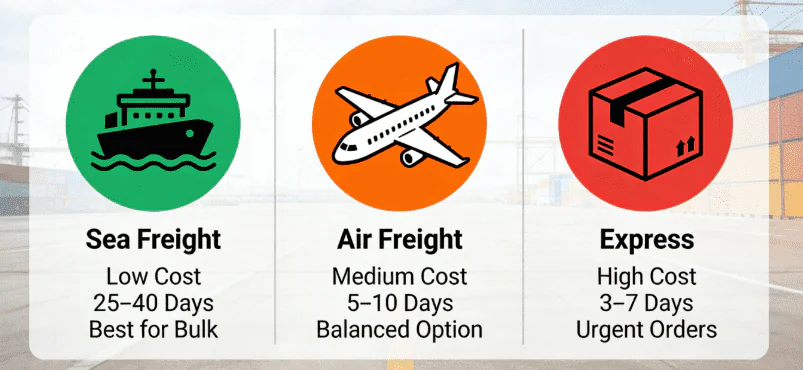
You don’t always need to choose just one shipping method. Many experienced importers combine different options to optimize cost and delivery time.
For example, you can ship bulk goods by sea to reduce costs, while sending a small portion by express to start selling earlier. This strategy helps improve cash flow and reduce risk.
If you are not sure which option is best for your business, working with a sourcing agent can help you design the most efficient shipping plan.
Not sure which shipping method is right for you?
👉 Get a free shipping plan based on your product, quantity, and target market.
👉 We help you reduce cost, speed up delivery, and avoid common mistakes.
4. Shipping Cost from Yiwu to USA & Europe
Shipping cost depends on multiple factors. Knowing the main cost drivers helps importers plan their budget more accurately.
Key factors affecting shipping cost:
- Weight & Volume: Heavier or bulkier items cost more to ship. Air freight and express are sensitive to weight.
- Shipping Method: Sea freight is cheapest for bulk shipments, air freight is medium, express is the most expensive.
- Season: Peak seasons like before Christmas or Chinese New Year increase costs.
- Customs Duties & Taxes: Import duties, VAT, and other charges can add to total cost.
📊 Cost Comparison Table (Example)
| Shipping Method | Cost Basis | Approximate Rate | Best For |
| Sea Freight | per CBM | $80–$150 | Bulk, heavy orders |
| Air Freight | per kg | $5–$8 | Medium-sized shipments |
| Express (DHL/FedEx/UPS) | per kg | $15–$30 | Small packages, urgent orders |
Note: Actual rates depend on shipment size, weight, destination port, and season. Always request a quote before booking.
5. Shipping Time Comparison
Shipping time is a key factor for importers, especially for seasonal products or urgent orders. The choice of shipping method directly affects delivery speed.
📊 Shipping Time Table
| Shipping Method | Estimated Time to USA | Estimated Time to Europe | Notes |
| Sea Freight | 25–35 days | 30–40 days | Best for bulk, not urgent |
| Air Freight | 5–10 days | 5–8 days | Good balance speed vs cost |
| Express Shipping | 3–7 days | 3–5 days | Fastest, but more expensive |
Tip: Combine shipping methods strategically. For example, send urgent samples by express while shipping bulk inventory by sea.
6. Common Shipping Problems (And How to Avoid Them)
Shipping from Yiwu to the USA or Europe can involve several challenges, especially for new importers. Knowing the common problems and how to avoid them will save you time, money, and stress.
1. Delays During Peak Seasons
High demand during holidays, such as Christmas or Chinese New Year, can lead to congested ports and longer transit times. To avoid this, plan your orders well in advance. Consider shipping early or splitting shipments to reduce the risk of delays.
2. Hidden Costs
Some suppliers or logistics providers may quote a low price but exclude fees like handling charges, packaging, or documentation. Always request a detailed quote, including all costs, before confirming your order. Transparency at the beginning helps prevent unexpected expenses.
3. Shipping Errors from Suppliers
Incorrect labeling, damaged packaging, or wrong products can cause issues during transit and customs clearance. To minimize this risk, inspect products before shipping or use a sourcing agent who provides quality control services. Clear communication with suppliers is key.
4. Customs Delays
Incomplete or inaccurate customs documentation is one of the most common reasons shipments get held up. Always provide correct invoices, HS codes, packing lists, and other required paperwork. Working with an experienced freight forwarder or sourcing agent can help ensure smooth clearance.
5. Lost or Damaged Shipments
Though rare, shipments can be lost or damaged during transit. Using proper packaging, tracking services, and insurance can protect your goods. For high-value items, always consider shipping insurance.
By understanding these common shipping problems and taking preventive steps, you can ensure your Yiwu imports arrive on time, intact, and without unnecessary costs. Partnering with a reliable sourcing agent or freight forwarder can simplify the process and give you peace of mind.
Frequently Asked Questions (FAQ)
Q1: How much does it cost to ship from Yiwu to the USA or Europe?
Shipping costs depend on several factors, including the method you choose, the size and weight of your shipment, and seasonal demand. Sea freight is the most cost-effective option for bulk shipments, air freight offers a balance between speed and cost, and express shipping through companies like DHL, FedEx, or UPS provides the fastest delivery but comes with higher fees. To get an accurate estimate, it is always best to request a detailed quote from your supplier or freight forwarder before placing an order.
Q2: How long does it take for goods to arrive from Yiwu?
The transit time varies depending on the shipping method you select. Sea freight usually takes between 25 and 40 days, making it suitable for large or heavy shipments that are not time-sensitive. Air freight typically takes 5 to 10 days, which works well for medium-sized shipments that need faster delivery. Express shipping is the quickest option, with most packages arriving in 3 to 7 days. Planning ahead is especially important during peak seasons to avoid delays.
Q3: Can I combine shipments from multiple suppliers?
Yes, consolidation services allow you to merge products from different suppliers into a single shipment. This approach reduces shipping costs, simplifies customs clearance, and ensures that all your items arrive together at the destination. Using a reliable sourcing agent to manage the consolidation can save time and reduce the risk of missing or delayed shipments.
Q4: Do I need a customs broker?
For large or high-value shipments, using a customs broker is highly recommended. Brokers handle the preparation of documentation, calculation of duties and taxes, and ensure smooth clearance at the destination country. Even for smaller shipments, consulting a broker or an experienced freight forwarder can help you avoid costly mistakes and reduce delays.
Q5: What documents are needed for customs?
Accurate documentation is crucial for smooth customs clearance. Essential documents include a commercial invoice listing product descriptions, quantities, and values, as well as a packing list detailing the contents and packaging of the shipment. The HS code is also required to classify your products correctly for duties, and shipments to the EU or certain US shipments require a customs declaration form. Providing precise and complete documents can prevent delays, fines, or shipment rejection.
Q6: Are there duty-free thresholds for small shipments?
Yes. In the United States, shipments valued under $800 can enter duty-free under Section 321, which is particularly useful for small e-commerce orders and samples. In the European Union, VAT and import duties are applied based on the product type and declared value. Understanding these thresholds and regulations helps you plan your shipments efficiently and avoid unexpected fees.
Conclusion
Shipping from Yiwu to the USA or Europe does not have to be complicated. By understanding the process, choosing the right shipping method, and planning ahead, you can improve efficiency and reduce costs.
Each shipping method offers different advantages, so it is important to match your choice with your business needs. Sea freight works best for bulk orders, air freight balances speed and cost, and express shipping is ideal for urgent deliveries.
For many importers, working with a sourcing agent is the most effective way to manage the process. It reduces risks, saves time, and ensures that your goods arrive safely and on schedule.
🚀 Get a Free Shipping Quote
Looking to ship from Yiwu to the USA or Europe?
We can help you source products, inspect quality, consolidate shipments, and arrange the most cost-effective shipping solution.
👉 Contact us today to get a free quote and start your sourcing journey with confidence.
View Related Content