table of contents
Introduction
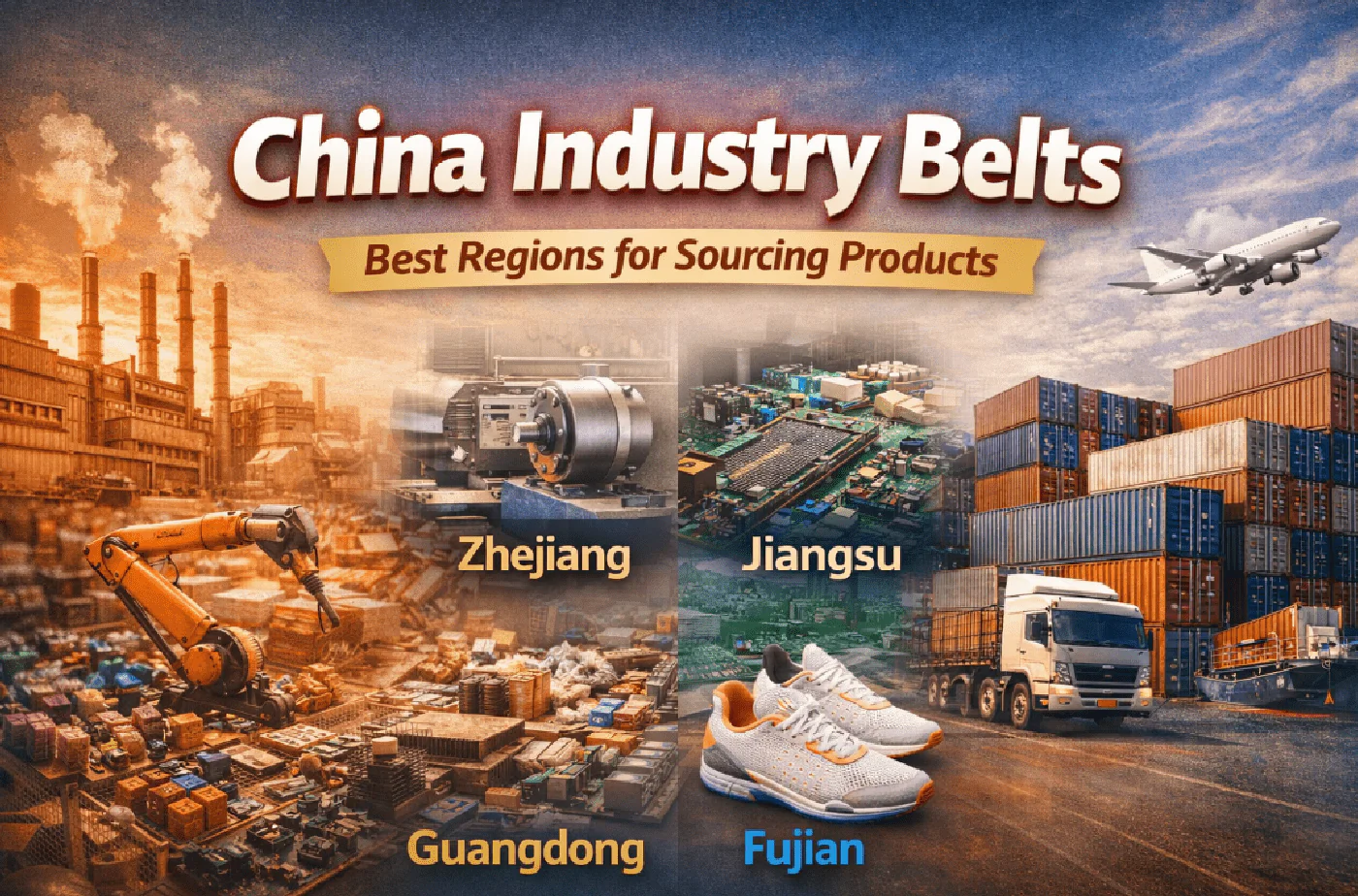
China is the world’s largest manufacturing country. But production is not evenly distributed. Different regions focus on different products. These specialized areas are called industry belts.
Understanding China industry belts helps buyers make better sourcing decisions. It reduces cost. It improves product quality. It also shortens lead time.
In this guide, you will learn:
- What China industry belts are
- Where to source different products
- Key regions and their strengths
- How to choose the right sourcing location
If you are planning to import from China, this is a must-read.
1. What Are China’s Industry Belts?
China industry belts are regional manufacturing clusters. Each area focuses on specific product categories. Over time, these regions develop complete and efficient supply chains.
In these clusters, everything is connected. Factories are located close to raw material suppliers. Packaging companies are nearby. Logistics providers are also part of the same network. This close distance reduces delays and improves coordination.
For buyers, this structure brings real advantages. You are not just working with one factory. You are entering a full ecosystem.
Key benefits for buyers:
● Lower production cost
Factories can source materials locally. This reduces transportation and procurement costs.
● Faster communication
Suppliers are used to working with international buyers. Many have dedicated export teams.
● More supplier options
You can compare multiple factories in the same region. This helps you find better pricing and quality.
● Better product specialization
Each region focuses on certain products. Factories have deep experience in their niche.
● Faster lead time
Since materials and components are nearby, production can move quickly.
● Easier customization
OEM and private label services are more common in established clusters.
Choosing the right region is a key step in sourcing. A good location can improve quality and reduce cost at the same time. In many cases, it matters more than choosing a single supplier.
For new buyers, understanding industry belts is the fastest way to avoid mistakes and find reliable manufacturers.
2. China Industry Belt Distribution Overview
China’s export manufacturing is mainly concentrated in coastal areas. These regions developed earlier. They have better infrastructure and stronger supply chains.
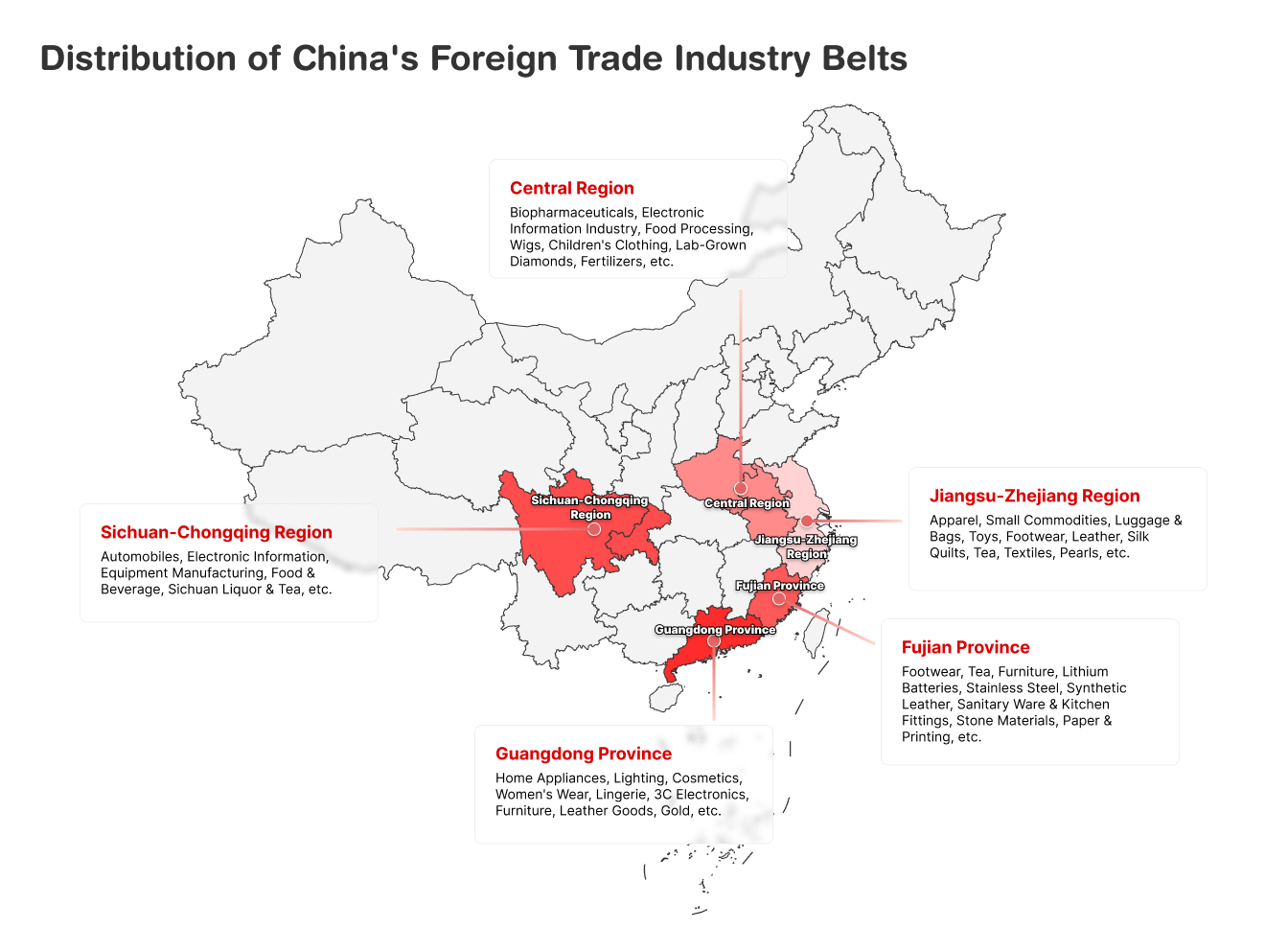
The most important industry belt regions include:
2.1 Example of Major Industry Belts
| Region | Key Products |
| Zhejiang | Small commodities, textiles, daily goods |
| Guangdong | Electronics, appliances, consumer goods |
| Jiangsu | Machinery, industrial equipment |
| Fujian | Footwear, bags, lifestyle products |
These regions form the core of China’s foreign trade system. A large share of global export products comes from these areas. Most international buyers source from these regions first.
There are clear reasons behind this concentration.
First, coastal locations offer easy access to major ports. This reduces shipping time and cost. Goods can be exported quickly to global markets.
Second, these regions have mature industrial ecosystems. Factories, suppliers, and service providers are closely connected. This improves efficiency across the entire production process.
Third, there is strong export experience. Many factories have worked with overseas buyers for years. They understand international standards, packaging requirements, and compliance rules.
2.2 Key Differences Between Regions
Each region has its own strengths. Buyers should understand these differences before choosing where to source.
- Some regions focus on low-cost, high-volume products
- Some focus on technology and innovation
- Others specialize in specific product categories
For example:
- Zhejiang is known for variety and flexible orders
- Guangdong leads in electronics and advanced manufacturing
- Jiangsu focuses on industrial and high-end production
- Fujian is strong in footwear and lifestyle goods
3. Zhejiang Industry Belt: Small Commodities Hub
Zhejiang is one of the most important sourcing regions in China. It is especially strong in small commodities, textiles, and light industrial products.
The supply chain here is highly developed. Products are diverse. Many factories support flexible production and low MOQ. This makes Zhejiang a top choice for small and medium buyers.
Another key advantage is export experience. Suppliers are familiar with international standards. Communication is efficient. Order handling is smooth.
Zhejiang is also known for speed. Buyers can quickly find suppliers, compare options, and move to production.
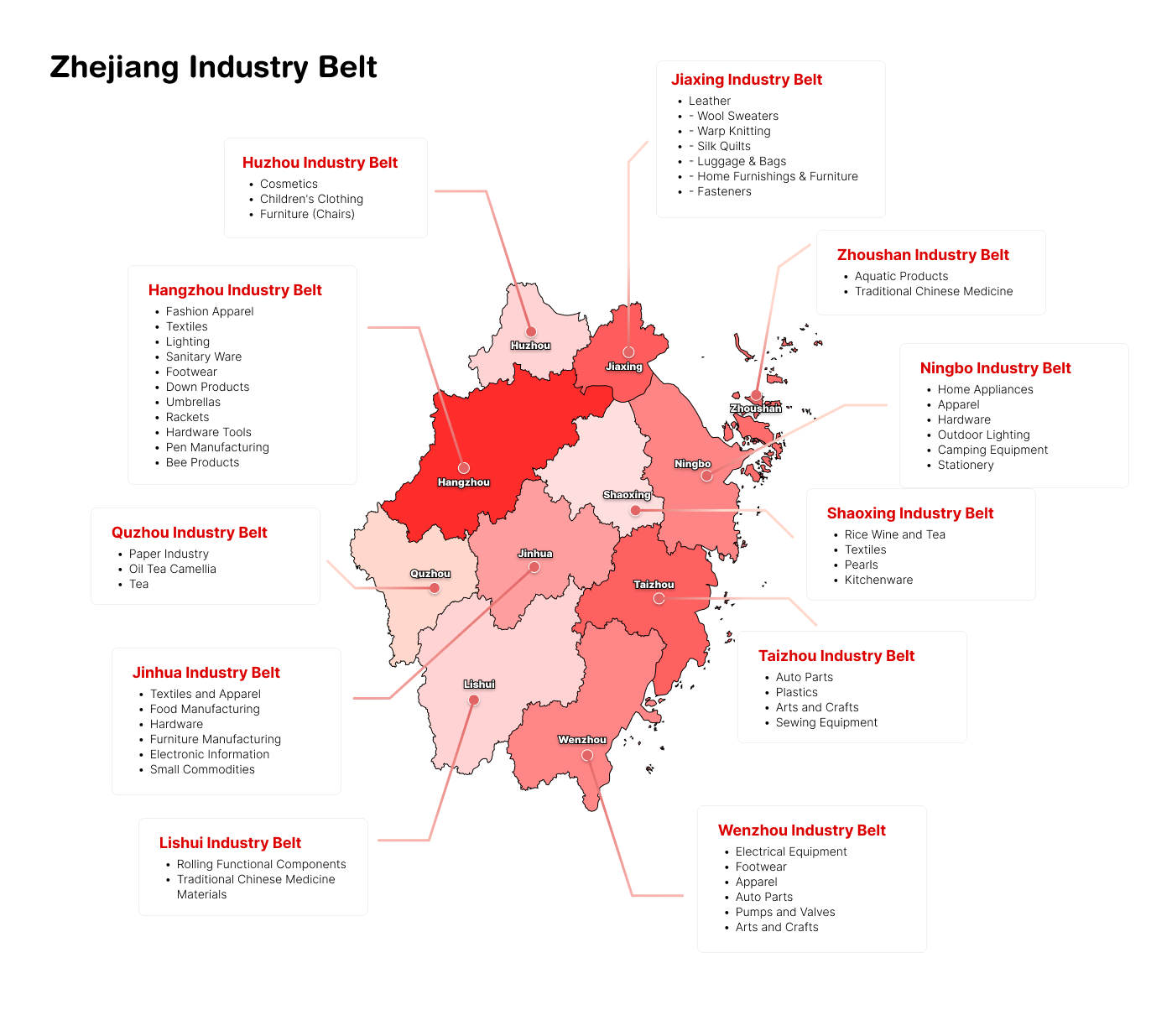
Key Cities in Zhejiang
| City | Main Products | Key Advantages | Best For Buyers |
| Yiwu | Gifts, accessories, household items, promotional products | Huge supplier network, low MOQ, wide product range | Small business, e-commerce sellers, multi-category sourcing |
| Ningbo | Home appliances, hardware, stationery, plastic products | Strong export experience, stable quality, OEM support | Brand owners, medium to large buyers |
| Hangzhou | Apparel, textiles, fashion products | Trend-driven supply, fast updates, flexible production | Fashion brands, online sellers |
| Shaoxing | Fabrics, textile materials | Large textile market, competitive pricing, fast sampling | Clothing brands, textile importers |
Why Zhejiang Is a Top Choice
Zhejiang offers a strong balance of flexibility, variety, and cost efficiency. It is one of the easiest regions for new buyers to start.
It is especially suitable for:
- Small and medium businesses
- E-commerce sellers (Amazon, Shopify, etc.)
- Buyers sourcing multiple product categories
- Importers who want lower MOQ and faster turnaround
If your goal is to test products, build a product line, or source different items in one place, Zhejiang is often the best starting point in China.
Pro Tip for Buyers
If you plan to source from multiple suppliers in Zhejiang, especially in Yiwu, consider using a sourcing agent.
A local team can help you:
- Combine orders from different suppliers
- Check product quality before shipment
- Arrange consolidated shipping
This reduces cost and simplifies the sourcing process.
4. Guangdong Industry Belt: Electronics & OEM Hub
Guangdong is one of the most developed manufacturing regions in China. It is a key hub for electronics, appliances, and consumer goods.
The supply chain is mature and efficient. Many factories support OEM and ODM services. Suppliers have strong export experience and understand international standards.
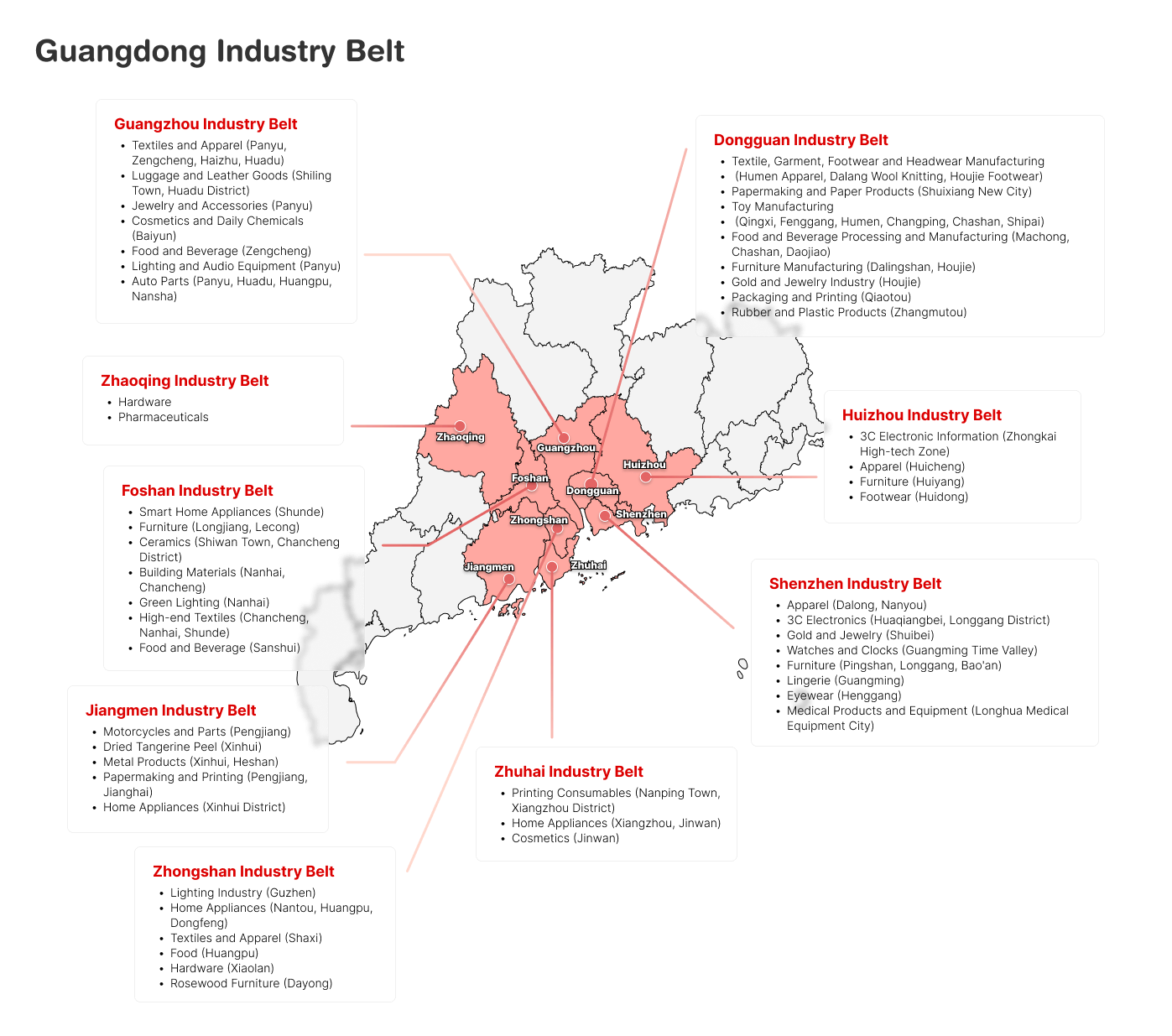
Key Cities in Guangdong
| City | Main Products | Key Advantages | Best For Buyers |
| Shenzhen | Consumer electronics, smart devices, tech accessories | Strong R&D, fast product development, OEM/ODM support | Startups, tech brands, custom product development |
| Guangzhou | Apparel, bags, accessories, cosmetics | Trend-driven products, strong wholesale markets | Fashion buyers, e-commerce sellers |
| Dongguan | OEM manufacturing, industrial products | Large production capacity, stable quality, experienced factories | Bulk orders, long-term production |
| Foshan | Furniture, kitchenware, home appliances, building materials | Complete supply chain, strong home product cluster | Home & living brands, wholesalers |
Why Guangdong Is a Top Choice
Guangdong stands out for its manufacturing strength and speed. It is suitable for buyers who need:
- Fast product development
- Strong OEM and ODM capability
- Medium to large order volume
- Stable quality and export experience
For buyers focusing on electronics, home products, or scalable production, Guangdong is one of the best sourcing regions in China.
5. Jiangsu Industry Belt: Industrial Manufacturing Hub
Jiangsu is one of the most advanced manufacturing regions in China. It is known for industrial products, machinery, and high-end manufacturing.
Compared to Zhejiang and Guangdong, Jiangsu focuses more on quality, precision, and technology. Many factories operate in well-developed industrial zones. Production standards are higher, and processes are more standardized.
This region is a good choice for buyers who need reliable performance and consistent quality. It is especially suitable for industrial buyers and long-term projects.
Another advantage is infrastructure. Jiangsu has strong logistics networks and is close to major ports like Shanghai. This makes export operations smooth and efficient.
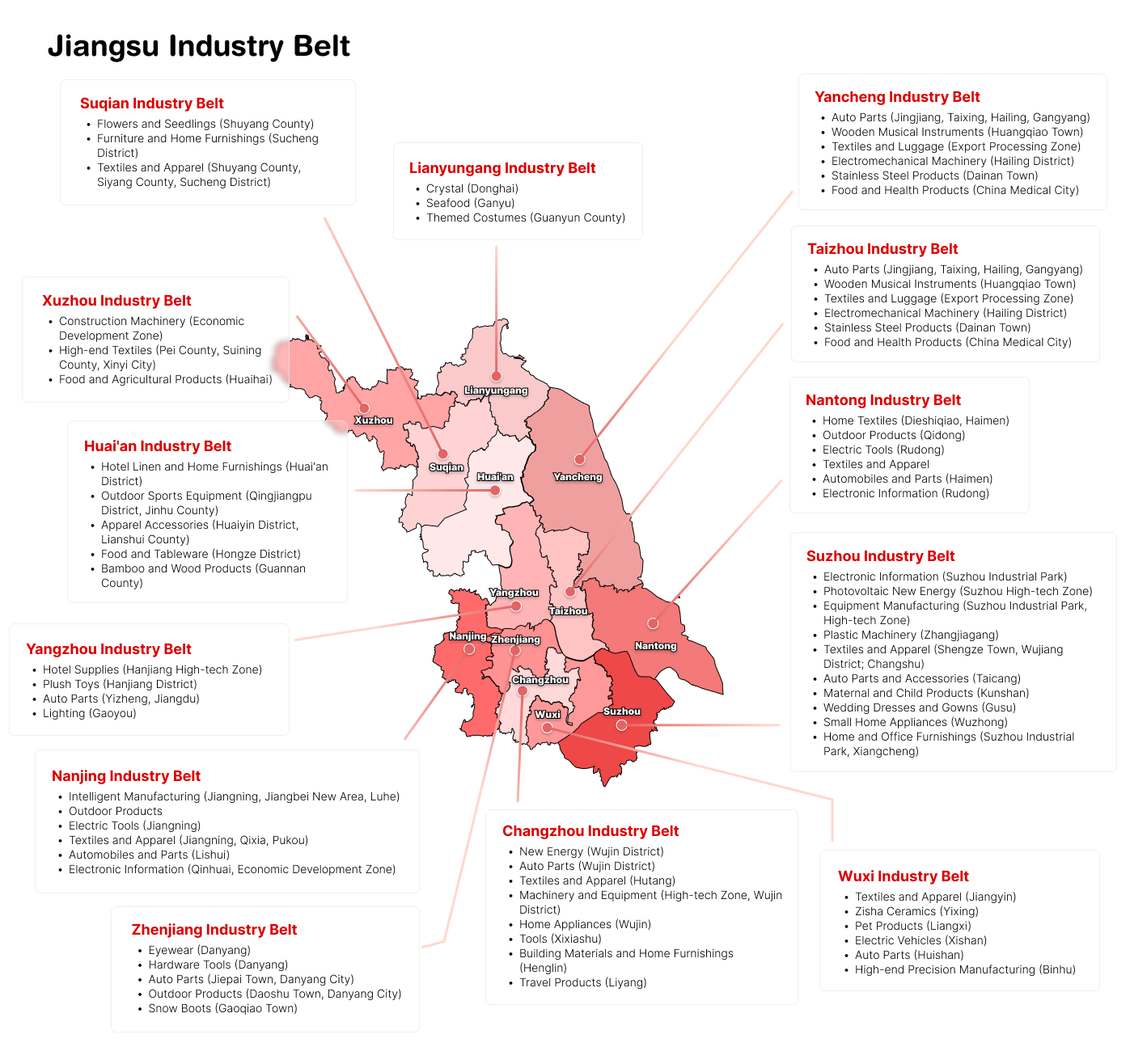
Key Cities in Jiangsu
| City | Main Products | Key Advantages | Best For Buyers |
| Suzhou | Electronics, precision components, industrial parts | High-quality production, advanced manufacturing, stable processes | Buyers needing precision products and consistent quality |
| Wuxi | Machinery, equipment, industrial systems | Strong engineering capability, reliable production | Industrial buyers, machinery importers |
| Changzhou | New energy products, automotive parts | Growing industry, modern production lines | Buyers in energy, automotive, and emerging sectors |
Why Jiangsu Is a Good Choice
Jiangsu stands out for its focus on quality and technical capability. It is best suited for:
- Industrial and machinery products
- High-precision components
- Long-term supply partnerships
- Buyers with strict quality requirements
While prices may be slightly higher than other regions, the consistency and reliability often make it worth the cost.
6. Fujian Industry Belt: Footwear & Lifestyle Hub
Fujian is a key manufacturing region in Southeast China. It is best known for footwear, bags, and lifestyle products.
This region has a strong export background. Many factories have long-term partnerships with international brands. Production is flexible, and pricing is competitive.
Fujian is especially strong in labor-intensive industries. Factories here are efficient and experienced. They can handle both standard products and customized orders.
Another advantage is product diversity within lifestyle categories. Buyers can source multiple related products in one region. This helps reduce sourcing complexity.
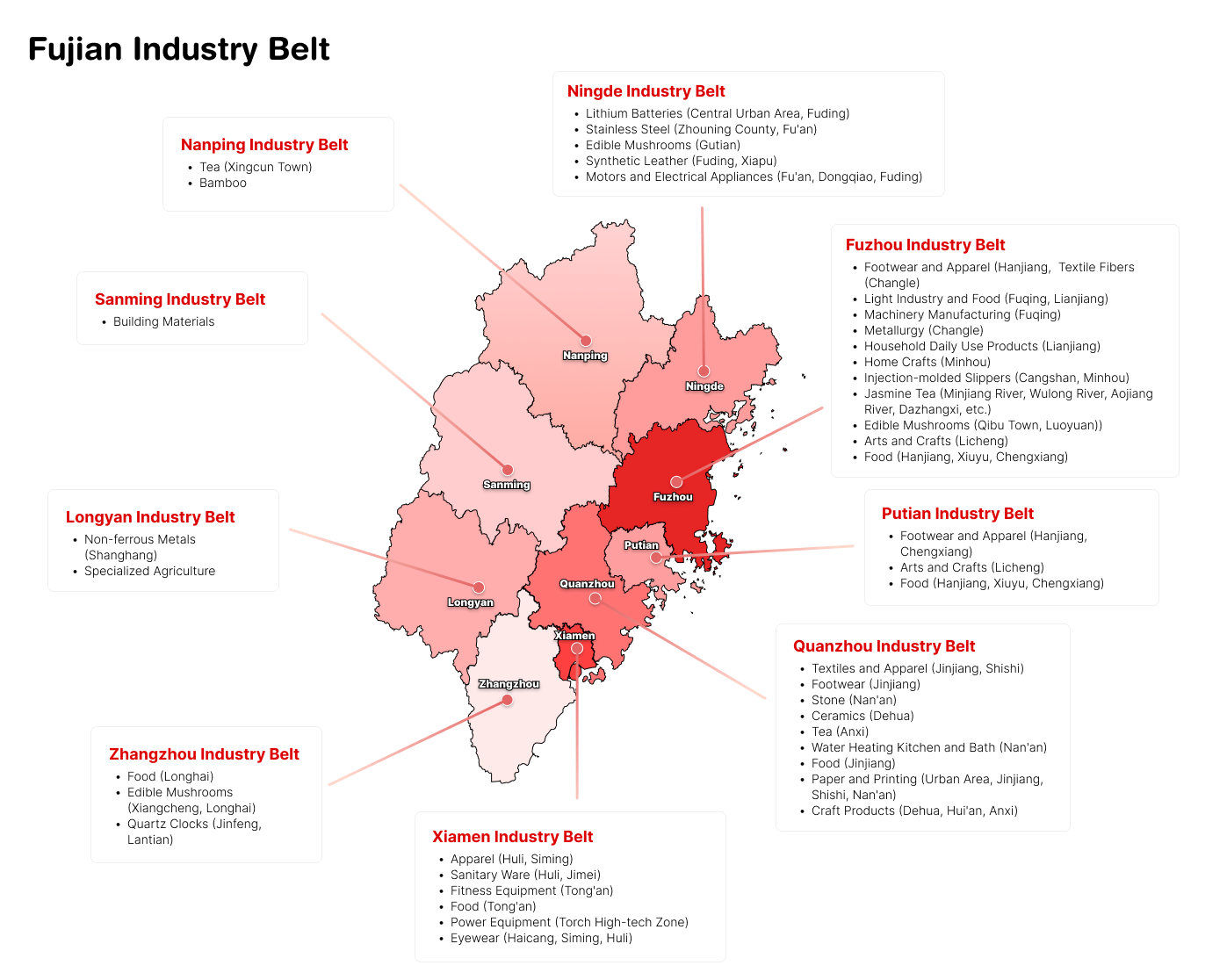
Key Cities in Fujian
| City | Main Products | Key Advantages | Best For Buyers |
| Quanzhou | Sports shoes, casual footwear, sandals | Mature footwear supply chain, strong OEM capability, competitive pricing | Footwear brands, wholesalers, private label buyers |
| Xiamen | Fitness equipment, sanitary ware, outdoor products | Strong export experience, modern factories, stable quality | Outdoor brands, fitness product buyers |
| Fuzhou | Daily use products, bags, light industrial goods | Flexible production, wide product range | General merchandise buyers, importers with mixed product lines |
Why Fujian Is a Good Choice
Fujian offers a strong balance of price, flexibility, and export experience. It is especially suitable for:
- Footwear sourcing
- Bags and lifestyle products
- Medium to large volume orders
- Buyers looking for competitive pricing
If your business focuses on fashion accessories, daily use products, or footwear, Fujian is one of the most reliable regions in China.
7. How to Choose the Right Industry Belt in China
Choosing the right location is critical for successful sourcing. A good region can reduce cost, improve quality, and make communication easier. If you choose the wrong region, even a reliable supplier may not meet your expectations.
Here is a simple step-by-step approach.
Step 1: Define Your Product
Start by clearly defining what you want to source. This includes the product type, materials, quality level, and your target price range. Different products belong to different regions, so clarity at this stage helps you avoid wasting time on unsuitable suppliers.
When your requirements are clear, it becomes much easier to communicate with factories and get accurate quotations.
Step 2: Match the Right Region
Once your product is defined, the next step is to find the right industry belt. Each region in China specializes in certain categories, so choosing the right one improves both efficiency and results.
For example, small commodities are mainly produced in Zhejiang, electronics are concentrated in Guangdong, and machinery is commonly sourced from Jiangsu. Footwear and lifestyle products are often found in Fujian.
Focusing on the correct region allows you to work with suppliers that already have experience in your product category.
Step 3: Compare Multiple Suppliers
It is important not to choose the first supplier you find. Even within the same region, factories can vary in price, quality, and service level.
Take time to compare several suppliers. Look at their quotations, sample quality, and communication speed. This process helps you identify which factory is the most reliable and suitable for your needs.
Step 4: Check Factory Capabilities
Before placing an order, you should carefully evaluate the factory. Do not rely only on product photos or online listings.
Check whether the supplier has stable production capacity and relevant certifications. It is also important to understand their export experience and quality control process. Requesting samples is strongly recommended, as it gives you a clear idea of what to expect in mass production.
Step 5: Work with a Sourcing Agent
If you are new to sourcing from China, working with a sourcing agent can simplify the process. A local team can help you find reliable suppliers, negotiate better prices, and manage quality control.
They can also coordinate orders and handle shipping, especially when you are sourcing from multiple regions. This reduces your workload and helps avoid common mistakes.
Final Tip
Start with one product and one region. Keep the process simple at the beginning. Once you gain experience, you can expand to more suppliers and product categories.
A clear and structured approach will help you reduce risk and build a more stable supply chain.
8. People Also Ask
Where are most products manufactured in China?
Most products are manufactured in coastal regions such as Zhejiang, Guangdong, Jiangsu, and Fujian. These areas have strong supply chains, better infrastructure, and easy access to major ports.
Which city in China is best for wholesale products?
Yiwu is widely considered the best city for wholesale products. It offers a huge variety of items and supports low MOQ orders. It is especially suitable for small businesses and online sellers.
What is the best place to source electronics in China?
Shenzhen is the best place to source electronics. It has a strong ecosystem for components, assembly, and product development. Many factories support OEM and ODM services.
Why do buyers choose different regions in China?
Different regions specialize in different products. This allows buyers to find better prices and higher quality. For example, one region may offer better materials, while another offers faster production. Choosing the right region helps improve efficiency and reduce sourcing risks.
Is it cheaper to source directly from factories in China?
In most cases, yes. Buying directly from factories can reduce costs. However, it also requires more effort in supplier verification, communication, and quality control.
Many buyers work with sourcing agents to balance cost and efficiency.
How do I find reliable suppliers in China?
Start by selecting the right industry belt. Then compare multiple suppliers within that region.
Check samples, confirm certifications, and review export experience. Working with a local sourcing agent can also help reduce risk and save time.
Conclusion
China’s industry belts are the foundation of global manufacturing. Each region has its own strengths. Choosing the right one can improve product quality, reduce cost, and speed up production.
Zhejiang is ideal for small commodities and flexible orders. Guangdong is best for electronics and custom production. Jiangsu focuses on industrial and high-precision products. Fujian is strong in footwear and lifestyle goods.
For buyers, understanding these regions is the first step to successful sourcing. A clear strategy helps you avoid mistakes and find the right suppliers faster.
If you are not sure where to start, working with a sourcing partner can make the process easier. A local team can help you choose the right region, connect with reliable factories, and manage the entire order process.
View Related Content