table of contents
About 80% of the “suppliers” you’ll find on Alibaba and similar marketplaces are trading companies, not the factories themselves (Accio, 2026). That’s not automatically a scam. But it means the listing you’re looking at right now might not be who it claims to be.
Most guides on this topic tell you to “be careful.” That’s not a plan. What actually works is a short, repeatable verification sequence: confirm the business is real, see the production floor, test with a sample, and control how you pay. Skip any one of those and you’re relying on luck.
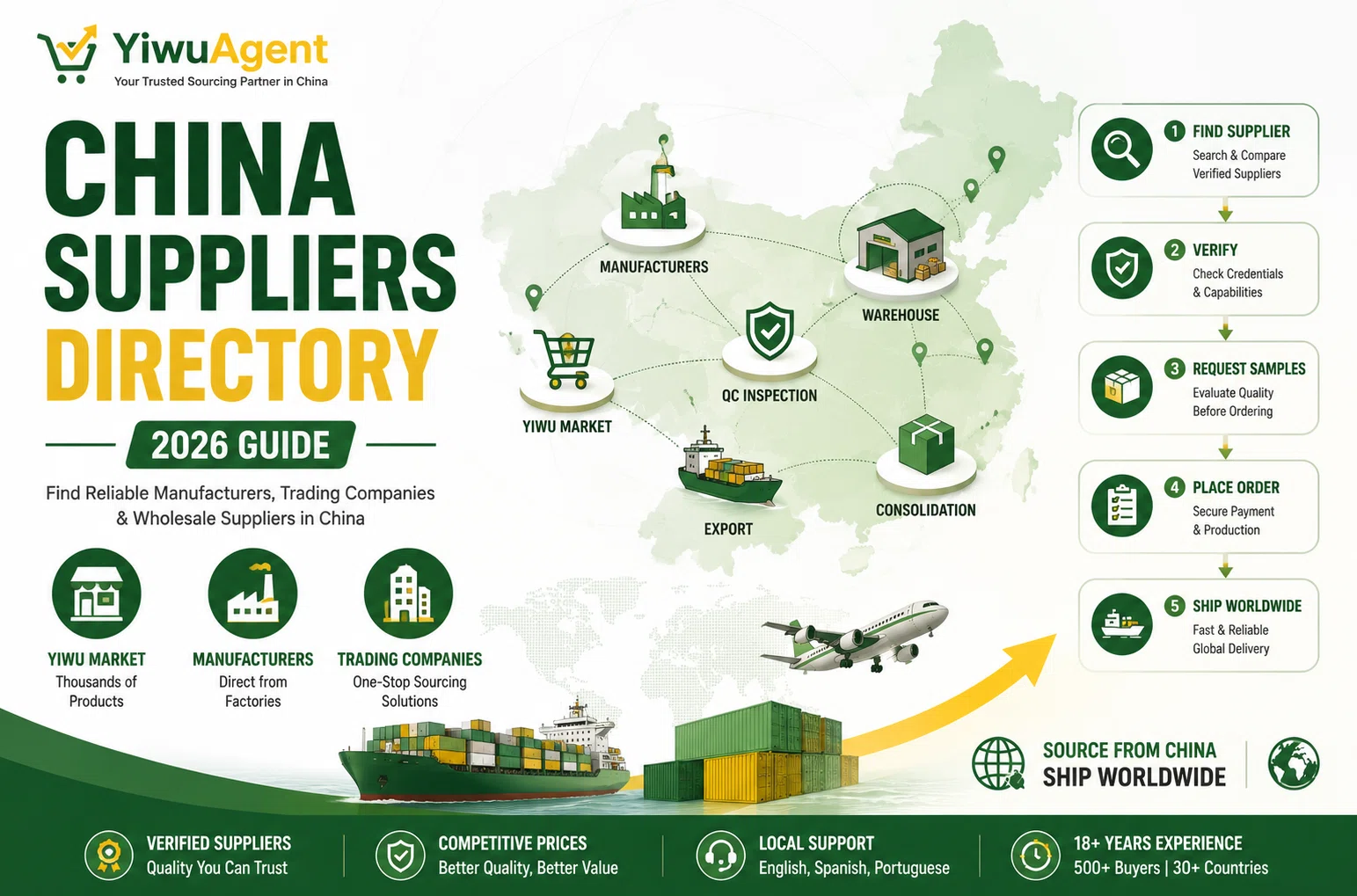
This directory-style guide walks through each step, in order, with what to actually ask for and what a real red flag looks like versus a false alarm.
Key Takeaways
- Roughly 80% of marketplace listings are trading companies, not factories (Accio, 2026), which isn’t inherently bad, but you need to know which one you’re dealing with.
- China’s NECIPS registry (gsxt.gov.cn) is reachable from overseas; the real barrier is the Chinese-only interface and CAPTCHA checks, not a geographic block.
- A live video call is harder to fake than photos, and a sample order reveals what specs can’t.
- Full upfront payment to a personal bank account is the single strongest fraud signal, and a deposit split or escrow tool protects you far better.
What’s Actually the Difference Between a Factory, a Trader, and an Agent?
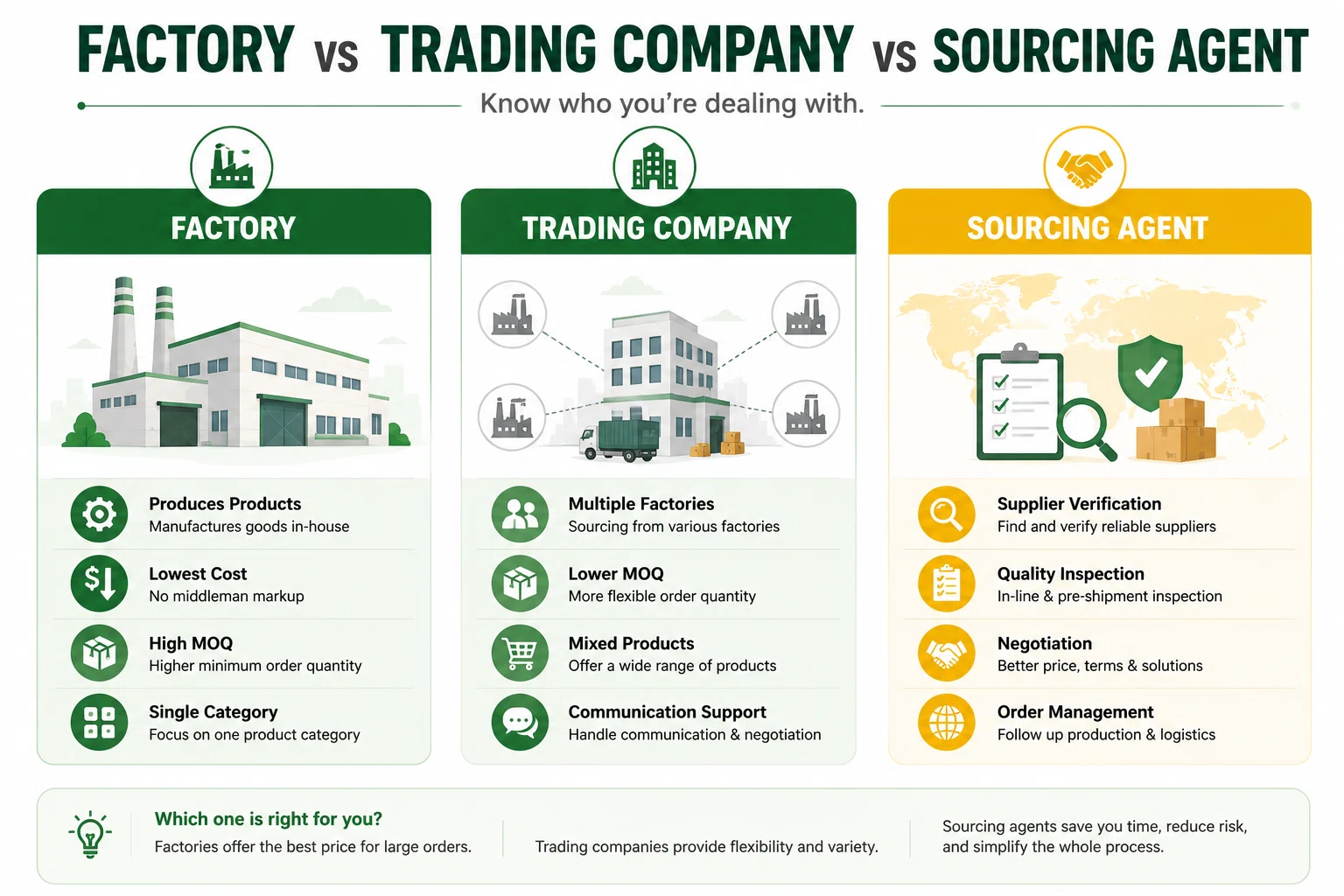
Most listings labeled “supplier” on Chinese B2B marketplaces are trading companies reselling another factory’s output, not manufacturers themselves. Roughly 80% of Alibaba’s suppliers fall into this category (Accio, 2026), and sourcing directly from the manufacturer instead can cut costs by up to 30% on some orders, according to the same analysis.
That doesn’t make trading companies bad. For a first order, a small batch, or a mix of products from different categories, a trading company can be the more practical choice; they consolidate shipping and handle language and negotiation for you, which is exactly what our supplier sourcing service does when you’d rather not sort this out alone. The problem shows up only when one misrepresents itself as the factory, and can’t answer basic production questions when pressed.
A sourcing agent sits in a different role entirely. Rather than selling you product, an agent is paid to verify who you’re actually dealing with and manage the order on your behalf. If you’d rather compare marketplaces directly first, our guide to the best China wholesale websites is a good next stop.
How Do You Check If a Chinese Supplier’s Business License Is Real?
China’s National Enterprise Credit Information Publicity System (NECIPS) is the only official registry for confirming a company’s legal status, filings, and any penalties on record. It’s reachable from overseas; the real obstacle is that the system is Chinese-only and requires clearing a CAPTCHA and real-name check, not a block on foreign users.
To search it, you’ll need the supplier’s exact Chinese company name or their Unified Social Credit Code (USCC), an 18-digit number every registered business must display on contracts and invoices. A legitimate supplier will hand this over without hesitation. One that stalls, or gives you an English-only “trade name” instead, is worth a second look.
NECIPS shows registration status, business scope, capital, and any recorded fines or business-anomaly flags. It won’t tell you whether the company actually manufactures what it claims to sell. That’s what the next two steps are for.
Our team runs this exact check on every new factory before recommending it to a client. It takes a few minutes once you have the USCC, and it’s caught more than one shell company that looked perfectly fine on paper otherwise.
Why Do Video Factory Tours Matter More Than Photos?
Photos are easy to fake, and increasingly, so are AI-generated “factory” images that show a clean, generic production floor with no real people on it. A live video call is much harder to stage convincingly, which makes it one of the more reliable checks left available to a remote buyer.
Ask for a walk-through video call rather than pre-recorded footage. On the call, look for machinery actually running, workers visibly present, and product from your exact order category on the line. A supplier who can only offer a scripted video tour, or who repeatedly reschedules, is signaling something.
This step doesn’t need to feel adversarial. Framing it as “can we do a quick video walk-through before we finalize the order” is a normal request that any real factory handles routinely.

The Biggest Red Flags in a Supplier’s First Reply
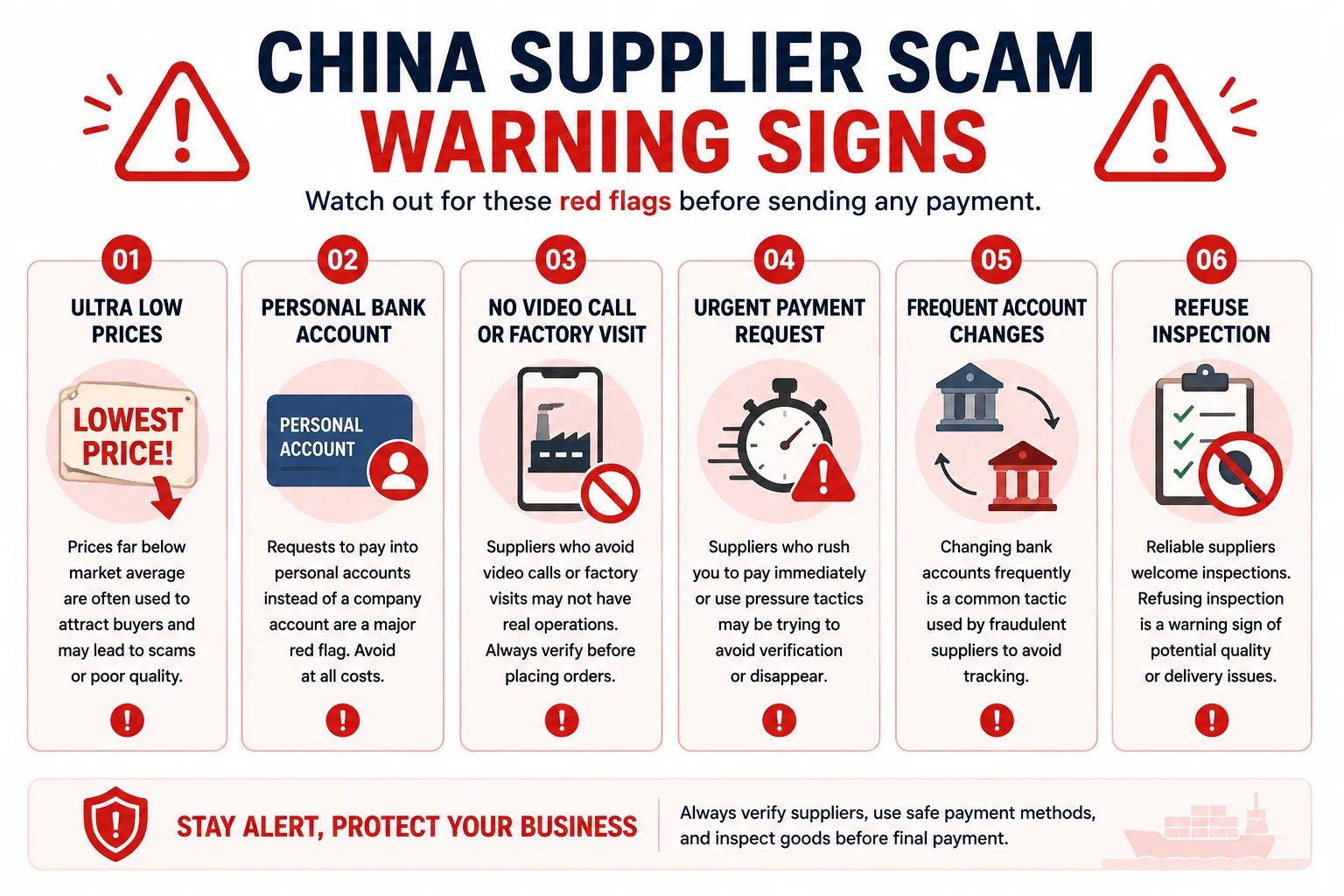
A supplier’s very first response often tells you most of what you need to know. Four patterns are worth watching for before you go any further:
- No business license number offered. A legitimate supplier states this without being asked twice.
- Pricing well below every other quote. Unusually low prices often mean lower-grade materials, or no intention to ship at all.
- Pressure to move off-platform immediately. Marketplaces keep a paper trail; a supplier pushing you to WhatsApp or email before you’ve even discussed the order is avoiding that record.
- Vague or copy-pasted answers to specific questions. A real factory can answer questions about MOQ, materials, and lead time in specifics, not generic marketing language.
None of these alone is proof of a scam. Together, two or more of them in a first exchange is a strong enough signal to slow down and verify before sending anything.
Should You Order a Sample Before Committing to a Bulk Order?
A sample order is the cheapest insurance available in this whole process. It reveals real material quality, actual packaging, and true lead time, none of which a spec sheet or product photo can confirm on its own.
A sample also tests things beyond the product itself: how fast the supplier actually ships once payment clears, how responsive they are to follow-up questions, and whether what arrives matches what was described. Any mismatch here is far cheaper to discover on a $50 sample than on a $15,000 bulk order.
Structure the request clearly: agree on spec, quantity, and a firm ship date before paying, and treat the sample stage as a real evaluation, not a formality on the way to the “real” order.
What Payment Terms Actually Protect You From a Scam?
Full payment upfront by wire transfer to a personal, rather than company, bank account is the clearest single predictor of fraud in this whole process. A legitimate supplier’s payment details should match their registered business name exactly.
A common structure is a deposit paid up front with the balance due before shipment, which limits your exposure if something goes wrong mid-production. Escrow-style tools such as Alibaba’s Trade Assurance go further: the platform holds your payment and only releases it to the supplier after you confirm receipt, or the inspection window closes. Payment terms are also usually negotiated alongside shipping, which is where our shipping and logistics coordination comes in on managed orders.
Neither option is complicated to set up, and a supplier who resists both in favor of “just wire it all to me directly” is telling you something about how they expect the relationship to go if a dispute comes up later.
When Does This Process Stop Being Worth Doing Yourself?
For a single small order, running this checklist yourself is entirely manageable. It gets heavier the more often you repeat it: recurring orders, multiple factories, or higher-value production all mean redoing this same verification work every time.
That’s less a verdict than a workload question. If you’re weighing whether to keep doing this checklist solo or hand the vetting work to someone else, here’s how a sourcing agent’s verification process compares to doing it direct, including the cost breakdown and when each approach actually makes sense.
Key Benefit: Every check in this guide (license lookup, video call, sample order, payment structure) takes minutes to hours, not days. Run all four before your first payment and you’ll catch the overwhelming majority of the scams that show up in supplier complaint forums.
Frequently Asked Questions
How do I know if a Chinese supplier is legitimate?
Combine two checks: confirm their business registration on NECIPS, and ask for a live video call showing the actual production floor. A supplier who stalls on either request is the clearest warning sign available before you’ve sent any money.
What’s the fastest way to verify a Chinese company’s business license?
China’s National Enterprise Credit Information Publicity System (NECIPS, at gsxt.gov.cn) is the only official registry. It’s reachable from overseas, though the Chinese-only interface and CAPTCHA/real-name checks are the real friction, not geography. Ask the supplier for their Unified Social Credit Code first.
Is it a red flag if a supplier is a trading company, not a factory?
Not by itself. About 80% of listings on marketplaces like Alibaba are trading companies rather than manufacturers (Accio, 2026), and many are legitimate for small or mixed-category orders. It only becomes a problem when a trading company misrepresents itself as the factory.
What payment method is safest when ordering from a new China supplier?
A deposit-plus-balance split paid to a verified company bank account, or an escrow tool like Alibaba’s Trade Assurance, which holds funds until you confirm receipt. A supplier who insists on 100% upfront to a personal account is the single strongest fraud signal.
Save This Checklist Before Your Next Order
Four checks catch the overwhelming majority of supplier scams: confirm the business registration, insist on a live video call, order a sample before committing to bulk, and control the payment structure. None of them require special access or tools, just the discipline to run them before, not after, you pay.
- Verify registration on NECIPS using the supplier’s USCC
- Request a live video walk-through, not photos or pre-recorded footage
- Treat the sample order as a real test, not a formality
- Use a deposit split or escrow tool, never 100% upfront to a personal account
Bookmark this directory-style checklist for your next sourcing trip, or see how our quality control process handles this verification work end-to-end.
View Related Content